Business decisions are rarely as simple as choosing between two options. Behind every major decision, there are people, responsibilities, expectations, and sometimes a great deal of uncertainty. Leaders are often expected to make the right call even when they do not have every answer. This is where leadership experience becomes especially valuable.
Notable Men brings attention to professional journeys, achievements, experiences, and perspectives that offer a broader understanding of modern success. Looking at leadership through the lens of real experience can help us understand why some decisions are shaped not only by knowledge, but also by lessons learned over time.
Experience Changes the Way Leaders Approach Decisions
A leader who has spent years managing teams, projects, clients, or businesses has usually encountered a wide range of situations. Some decisions may have produced excellent results, while others may have revealed what could have been handled differently.
These experiences create a practical understanding that cannot always be gained from books or formal training.
Experienced leaders tend to ask questions such as:
- What happened the last time we faced a similar situation?
- What risks are we overlooking?
- How could this decision affect employees and customers?
- What information are we still missing?
- What happens if the expected outcome does not occur?
This does not mean experienced leaders always make perfect decisions. Rather, experience can help them look at a situation from several angles before taking action.
Leadership Experience Helps Put Risk Into Perspective
Every business decision carries some level of risk. Expanding into a new market, hiring senior talent, changing a product, investing in technology, or entering a partnership can all involve uncertainty.
Experience can help leaders distinguish between a risk that deserves careful consideration and one that can be managed through planning.
Someone who has previously dealt with unexpected challenges may be more prepared to consider possible consequences before moving forward. Instead of reacting immediately, an experienced leader may pause, gather information, consult the right people, and create alternatives.
That measured approach can be particularly valuable when the pressure to act quickly is high.
Learning From Mistakes Creates Better Judgment
One of the most important parts of leadership experience is learning from mistakes.
No professional career develops without setbacks. A project may fail to meet expectations. A new strategy may not deliver the expected results. A hiring decision may not work out. Even a well-researched business plan can face circumstances that were difficult to predict.
What matters is what happens afterward.
Strong leadership involves reflecting on these experiences instead of simply moving past them. Leaders can ask what went wrong, what could have been recognized earlier, and what should change next time.
Over time, these lessons can strengthen judgment. A past mistake does not automatically determine a future outcome, but it can provide useful context for approaching a similar situation with greater awareness.
People Become Part of the Decision-Making Process
Business decisions are ultimately connected to people.
A strategy may look excellent on paper, but its success can depend on how employees respond to it. Customers may react differently than expected. Partners may have concerns that were not initially considered. Teams may need additional support before a new direction can work effectively.
Leadership experience often teaches professionals to consider these human factors.
Experienced leaders understand that communication matters. They know that people may need clarity before accepting change and that different teams can view the same decision from completely different perspectives.
This people-focused approach can make decision-making more thoughtful and practical.
Experience Encourages Long-Term Thinking
It is easy to focus on immediate results when a business is under pressure. Leaders may want quick growth, faster sales, immediate cost reductions, or instant improvements.
However, not every valuable decision produces an immediate outcome.
Leadership experience can encourage a longer view. Instead of asking only, “What will this decision achieve today?” an experienced leader may also consider, “Where could this take the business six months or several years from now?”
Long-term thinking can influence decisions involving company culture, employee development, customer relationships, brand reputation, technology, and sustainable growth.
The ability to balance immediate needs with future goals is an important part of responsible leadership.
Why Different Experiences Bring Different Perspectives
There is no single path to becoming an effective leader.
Some leaders develop through entrepreneurship. Others build their experience through corporate roles, technology, finance, operations, creative industries, or other professional fields. Each journey can provide different lessons.
This diversity of experience matters because businesses rarely face identical challenges.
A leader who has worked through organizational change may bring a different perspective to transformation. Someone with experience building a company from the ground up may approach resource allocation differently. A professional who has managed international teams may have a distinct understanding of communication and collaboration.
Sharing these experiences can help others think about business challenges in new ways.
The Role of Professional Stories in Leadership Learning
Leadership lessons do not always come from formal case studies or business textbooks. Sometimes, the most relatable insights come from hearing how professionals actually navigated their careers.
This is one reason professional storytelling has become increasingly valuable.
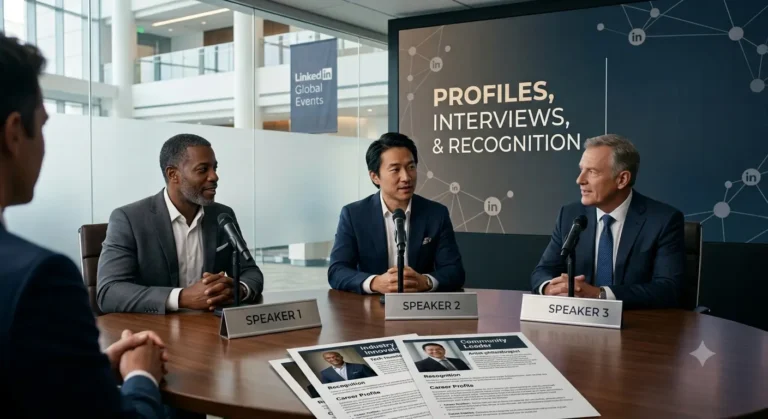
Notable Men focuses on experiences, achievements, perspectives, and stories that provide a more human view of professional life. Instead of presenting success as a simple destination, these stories can reveal the decisions, challenges, learning experiences, and turning points behind it.
For aspiring professionals and emerging leaders, these perspectives can provide useful context. They can also serve as reminders that meaningful careers are built through continuous learning rather than a single achievement.
How Digital Visibility Supports Leadership Conversations
Today, professional experiences can reach audiences far beyond traditional business networks. Digital channels allow leaders and professionals to share ideas, lessons, career experiences, and perspectives with people who may never meet them personally.
The Notable Men LinkedIn presence is part of this broader professional visibility journey. LinkedIn itself has become an important space for professionals to communicate expertise, discuss industry developments, build professional connections, and share career perspectives.
When meaningful experiences are communicated clearly, they can contribute to conversations that go beyond individual achievements. They can encourage other professionals to think about leadership, decision-making, growth, and professional responsibility from different angles.
Experience Is Valuable When It Continues to Evolve
Leadership experience should not become a reason to stop learning.
Business environments change constantly. Technology develops, customer expectations shift, industries evolve, and new challenges emerge. A decision-making approach that worked years ago may need to be reconsidered in a different environment.
The strongest leaders understand this reality.
They combine what they have learned from experience with new information, fresh perspectives, feedback, and continued learning. In this way, experience becomes a foundation rather than a limitation.
Conclusion
Better business decisions are rarely created by experience alone. They come from combining experience with curiosity, information, empathy, strategic thinking, and a willingness to learn.
Leadership experience can provide valuable context. It can help professionals recognize patterns, understand risks, learn from mistakes, consider people, and think beyond immediate results. More importantly, it can encourage leaders to approach complex decisions with greater perspective.
The stories shared through Notable Men demonstrate why professional experience deserves attention. Behind every meaningful achievement are decisions, challenges, lessons, and moments that helped shape the journey.
For professionals looking to grow, understanding those journeys can offer more than inspiration. It can provide practical perspectives on how thoughtful leadership develops—and how experience can influence better decisions over time.